
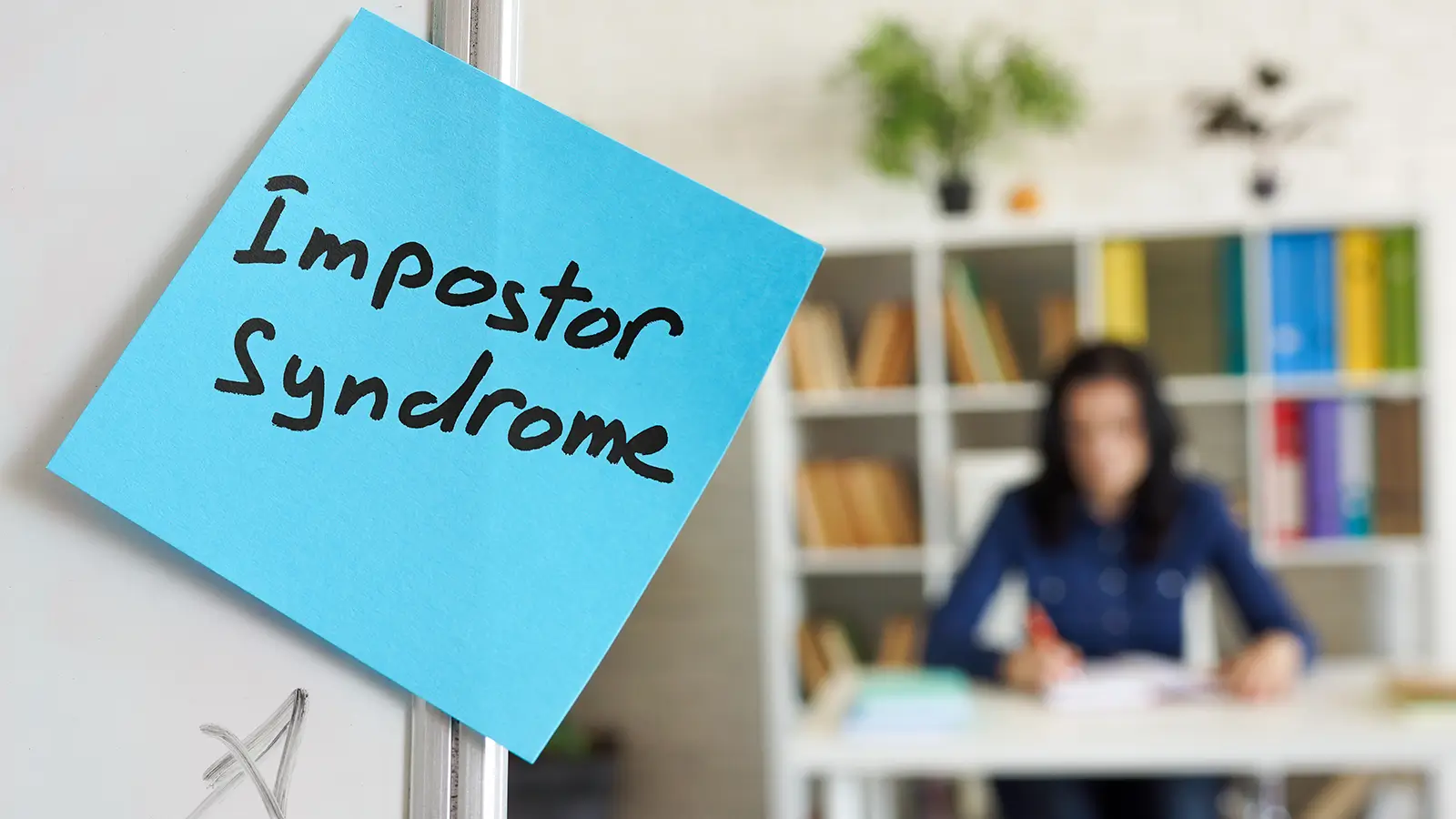
Managing Imposter Syndrome: the devil on your shoulder

Managing Imposter Syndrome and Embracing your True Potential


Navigating the professional landscape can often lead to internal monologues filled with self-doubt and imposter-like feelings. Thoughts such as “I’m just rubbish,” or “They’ll find me out, I’m a fraud,” plague many talented individuals. 

In fact, a staggering 62% of professionals have grappled with imposter syndrome in the last 12 months, with an even higher prevalence of 79% in fields like information and analysis. This phenomenon tends to affect high achievers, women, and those from under-represented groups.

As the responsibilities and challenges in the workplace evolve, especially with promotions and the rise of hybrid working, imposter syndrome intensifies. It hampers individuals’ ability to rebound from setbacks and constrains them from seizing growth opportunities. Fearful of failure, those affected are often hesitant to pursue innovation, which inherently involves a risk of failure.

Managing imposter syndrome

Practical Steps to Overcome Imposter Syndrome

I specialise in coaching individuals to manage these imposter-like feelings, empowering them to present their best selves with confidence. My approach involves a unique blend of personal values exploration, the development of resilient leadership mindsets, and the application of tools to identify and manage the inner saboteur. It works, and it is transformational.

By addressing and managing imposter syndrome, individuals experience enhanced well-being from a reduction in the frequency and power of their inner saboteur coming out to play. When that inner critic does come out, they turn to the “leader within” mindset that embodies the best of them. 

Besides the professional growth of the individual, their companies also benefit. Improved staff engagement, retention rates, and reduced absences are just a few of the positive outcomes.

Additionally, this coaching contributes to cultivating a robust leadership pipeline filled with emotionally intelligent and self-assured leaders, positioning your organisation for sustained success.

Client Testimonials - Dealing with My Imposter Syndrome

My biggest win? I feel more self assured. I think that little bit of knowledge has made a big difference...the biggest change for me is having clarity around my personal values...I didn't really understand the importance of it. I'd recommend [PatientMind] to anyone that wants to improve themselves.
Martin Maginnis
Digital Experience Manager
As a result of coaching I’m now able to have more confidence in my own ability, of who I am, and believe in myself, believe in my passions, and go forward with that…and be proud of that.

Managing Imposter syndrome - tackling the devil on your shoulder
Michelle Hastie
Group VAT Manager, Natwest Group
"It's been a year now, and it's been completely transformational of my lifestyle, my health, my wellbeing, my work: everything is just in a happier place... Really now I've got the coping mechanisms to deal with the issues that I was having before. So I'm able to look at the situation and reframe it in a more positive light, which means I'm more capable of dealing with whatever comes forward."
Hannah Lomax
Founder - Roebuck Digital
Coaching [with Alex!] was transformational in tackling my imposter syndrome and pushing me to accept my own successes and abilities. The impact on my work and the way that I’m managing my career is obvious, and has also been noticed in feedback from others…Alex didn’t stop at the level of surface techniques, we worked on the underlying issues. It was a cure rather than a sticking plaster.
Managing Imposter syndrome - tackling the devil on your shoulder
Anna Lowden
Treasury Management, Natwest Group.
Managing Imposter syndrome - tackling the devil on your shoulder

Alex's own inner imposter syndrome: I know what it feels like