Personality Profiling (DiSC)
Unlock Team Potential with DISC Personality Profiling
Have you ever wondered why you can’t seem to get on with a coworker? Why do they do the things they do? Are your projects falling behind because of difficulties between team members? Is there conflict bubbling up, or even out in the open? Such conflict and misunderstanding is inevitable in the workplace.
DISC provides a common language by which teams can bridge their differences, and improve their communication and efficiency.

What is the DISC Personality Profiling Assessment?
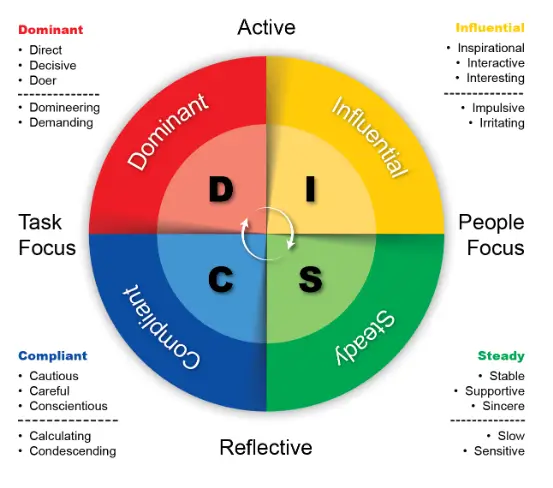
The DISC theory was first proposed in 1928 by William Moulton Marston, a physiological psychologist. He proposed that there were four forms of emotional expression: Dominance (D), Influence (I), Submission (S), and Compliance (C). These four types stemmed from people’s perceptions of themselves in relation to their surroundings. It wasn’t until the 1940s that an assessment was made to categorize people into the four behavioural types.
The DISC assessment is now used by businesses worldwide to help their employees gauge how they and their teammates handle conflict, how they communicate, and the motives behind their actions.
DISC Personality Profiling - Four Main Types
Unlock Your Leadership Potential with DISC Profiling
My clients have observed four key benefits from our DISC profiling sessions.
Four key benefits of personality profiling
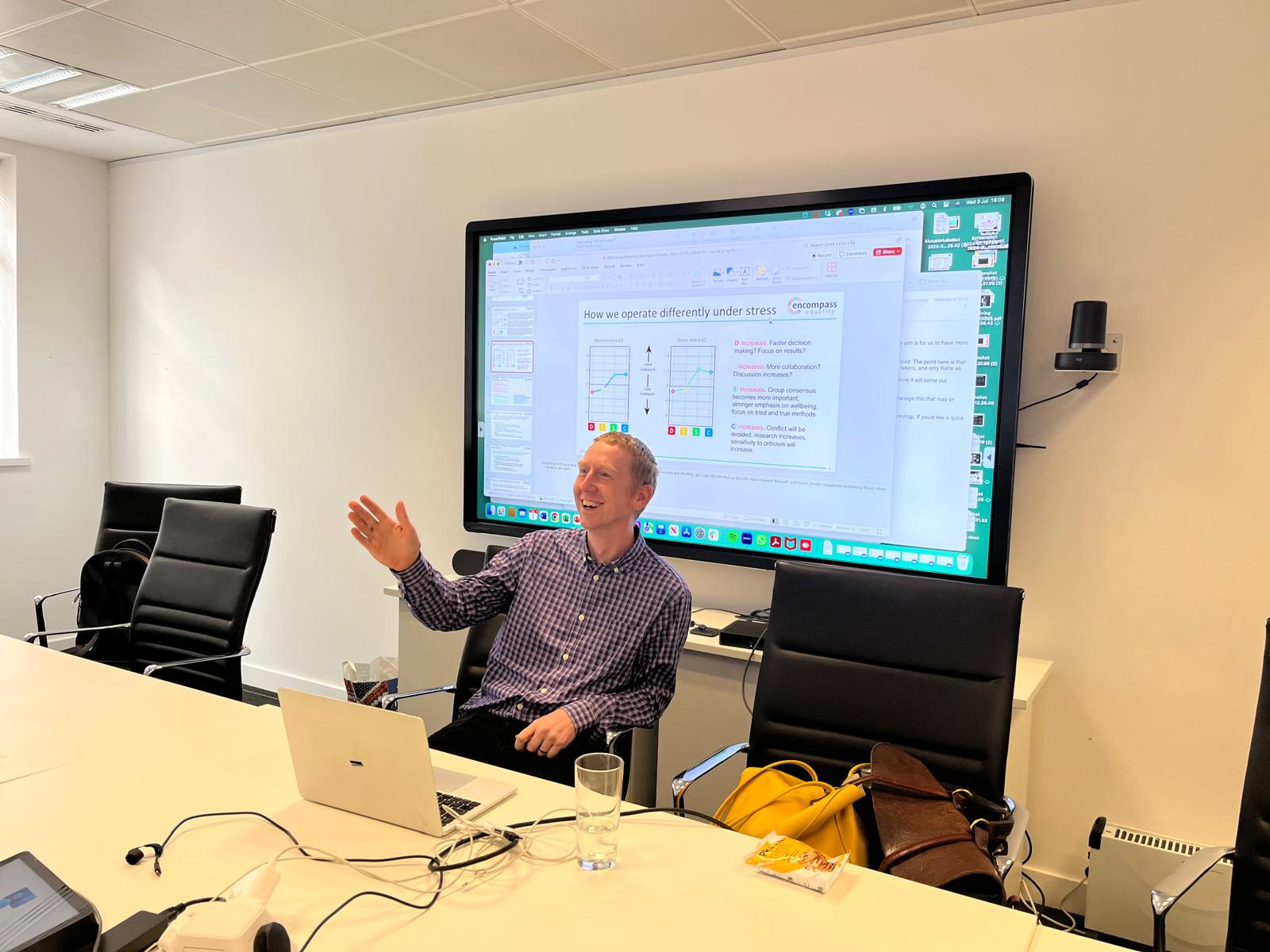
DISC personality profiling assessments can be carried out and debriefed with individuals, but also for teams through the “Group Dynamics” profile. This not only gives individual insights around how you operate with your strengths and weaknesses, but also how your personality profile fits in with the group. This is essential insight both to know how you fit in, but also whether the group as a whole has particular strengths and weaknesses that may need addressing.
As you become familiar with DISC personality types, you can also start applying its lessons to others in your environment: internal clients, and external customers. You become able to identify their personality types, improving your communication as you understand their preferences and inclinations.
If these benefits sound attractive to you, get in touch. Let PatientMind reduce your teams’ workplace conflict, misunderstanding, and improve engagement.