Difficult work relationships: using the drama triangle to escape the cycle
By Alex Patient
As a leadership coach, I often encounter clients who struggle with managing difficult relationships in their professional lives. One of the most powerful tools I use to help them is the Drama Triangle, a model that highlights the destructive roles we can fall into during challenging interactions: the Victim, the Persecutor, and the Rescuer. Working through the Drama Triangle has been transformative for many of my clients, helping them step out of unhealthy dynamics and take radical responsibility for their actions and outcomes.
What is the Drama Triangle?
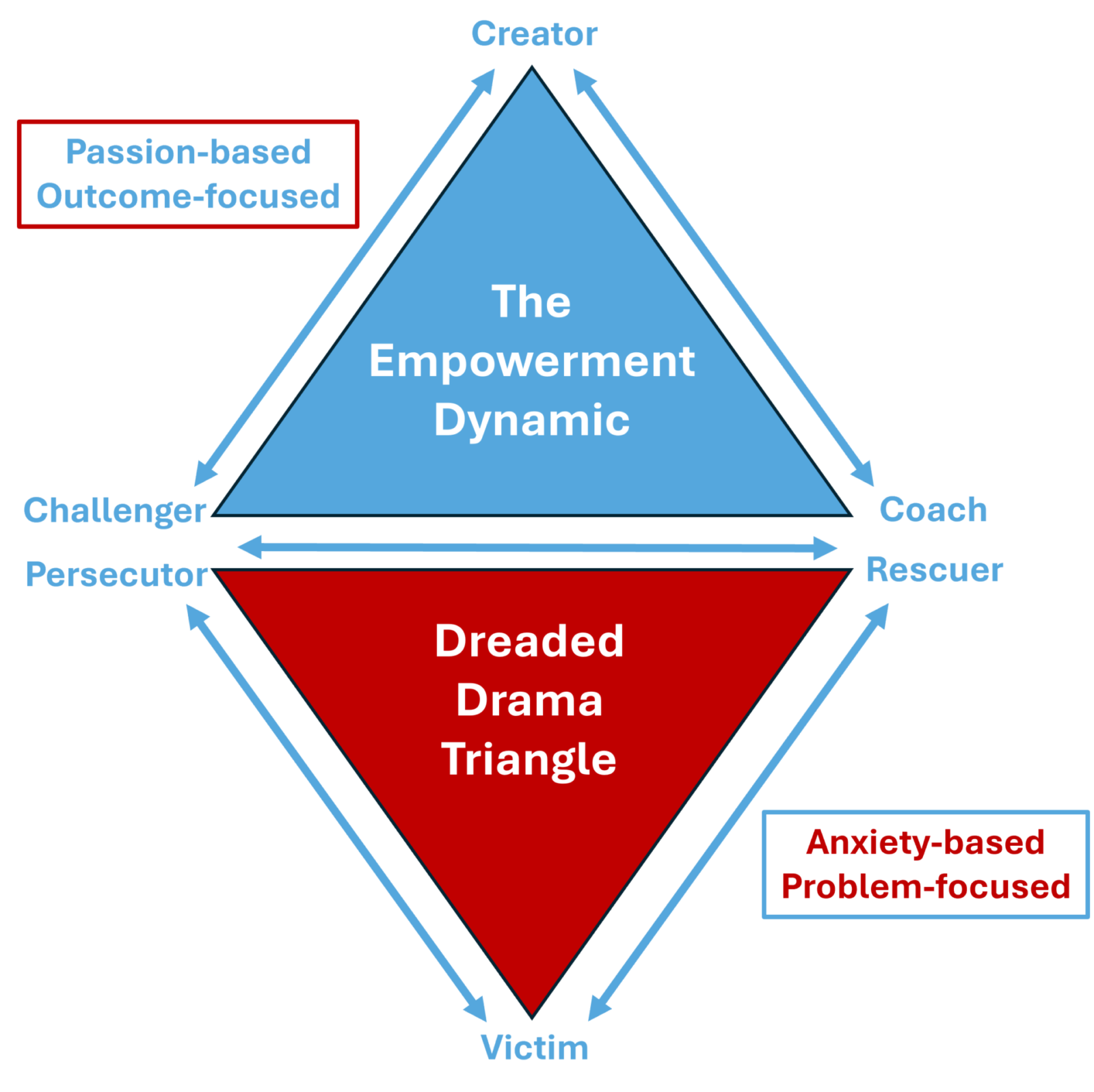
The Drama Triangle, developed by Dr. Stephen Karpman, describes a cycle where individuals adopt one of three roles:
- Victim: Feels powerless and blames others for their problems.
- Persecutor: Blames and criticizes others, often from a place of frustration or anger.
- Rescuer: Intervenes to help or “save” others, often at the expense of empowering them.
These roles can feel familiar, especially in high-pressure environments like corporate leadership. Many leaders unintentionally get caught in these dynamics, which can lead to strained relationships, reduced team performance, and feelings of burnout.
How I Work With Clients to Break the Cycle
In my coaching sessions, we start by identifying which roles my clients tend to fall into during difficult interactions. One client, for example, realized she was alternating between the Rescuer and the Victim. She believed she was doing her best to serve her leaders and team by taking on too much responsibility and “saving” others from failure. However, in reality, she was denying herself and her team the opportunity to grow and be accountable.
Through our work, we explored the narrative that was keeping her in the Rescuer role. She began to see how her actions were disempowering others, creating frustration for herself, and preventing her from leading with clarity and confidence.
Shifting to the Empowerment Dynamic
Once we’ve identified the roles in the Drama Triangle, I guide clients toward a healthier model of interaction called the Empowerment Dynamic (TED):
- Creator (instead of Victim): Focuses on possibilities and takes ownership of outcomes.
- Challenger (instead of Persecutor): Encourages growth and learning through constructive challenges.
- Coach (instead of Rescuer): Guides and supports others to find their own solutions.
For my clients, this shift is about taking radical responsibility for how they show up in their relationships. One of the most impactful outcomes of this work is the realization that, by stepping into the Creator, Challenger, or Coach roles, they can influence outcomes without falling into the trap of drama. This approach fosters greater resilience and empowers them to manage difficult relationships with confidence and clarity.
A Practical Path to Better Relationships
The clients who have worked through the Drama Triangle with me often describe feeling a renewed sense of control and purpose. One client recently shared how energized she felt after realizing she no longer needed to spend mental energy on unproductive dynamics. Instead, she could use that energy to build stronger, more collaborative relationships with her team and leaders.
Through practical steps, such as mindfulness in meetings, reframing unhelpful narratives, and consciously choosing to act as a Creator or Coach, my clients develop the emotional conditioning to navigate tough conversations with ease. These are practical leadership skills that improve not only how they manage relationships but also their overall performance and job satisfaction.
Why This Matters for Leaders
In leadership, managing relationships is key. Poor relationship management can lead to misunderstandings, low morale, and a lack of trust within teams. By addressing the roles they play in the Drama Triangle, leaders can unlock a new level of self-awareness and improve their ability to influence others in a positive, constructive way.
If you’re struggling with managing difficult relationships or find yourself caught in unproductive patterns, I encourage you to explore leadership coaching. Working through the Drama Triangle can help you shift out of reactive roles and into proactive leadership that aligns with your values and goals.
Through my leadership coaching, you can expect a tailored approach to improving your interpersonal dynamics and fostering a healthier, more collaborative work environment. Together, we can build the skills necessary to navigate challenging relationships and lead with authenticity and accountability.
If you’re ready to improve your leadership and relationship management skills, reach out to learn how we can work together.
Contact