Middle management isn’t what it used to be. Recent research from Harvard Business School reveals a shift in organisational expectations, with a preference for managers that support autonomy and creativity among employees, emphasising coordination and collaboration across functions to achieve goals effectively. The preference is to act ““less as Army commanders and more as basketball coaches”.
In today’s rapidly evolving landscape, even in technology-driven industries, middle managers play a pivotal role in connecting teams with diverse skill sets, from customer satisfaction and sales to R&D and analytics. This shift has been long overdue. According to HBS research, the demand for collaboration skills among managerial job postings tripled between 2007 and 2021, while requirements for supervisory capabilities decreased by nearly a quarter.
Why collaboration matters
Organisations are increasingly embracing a bottom-up approach to release the creativity and innovation of their frontline employees. The role of the manager is evolving from directing to enabling and inspiring. However, despite this trend, the training and support for middle management haven’t kept pace. Shockingly, only a third of UK managers receive regular management training, with a significant percentage receiving none at all.

Empowering Middle Managers
To effectively unleash the innovative potential of their teams, middle managers must evolve their skill sets beyond technical expertise to become effective enablers. As Arie de Geus succinctly puts it, a manager’s duty is to “create the conditions in which people can voluntarily give their best.” Here are some practical skills managers need to cultivate:
- Setting Clear Goals: Effective managers must articulate clear goals and objectives while ensuring their team understands their roles within the system. This requires curiosity and openness rather than a command-and-control approach.
- Identifying Barriers: Managers should help their team members identify and address individual challenges, fostering a space for personal growth and development.
- Prioritizing Focus: Great managers coach their staff on maintaining focus on high-value activities and understanding the significance behind their tasks for long-term success.
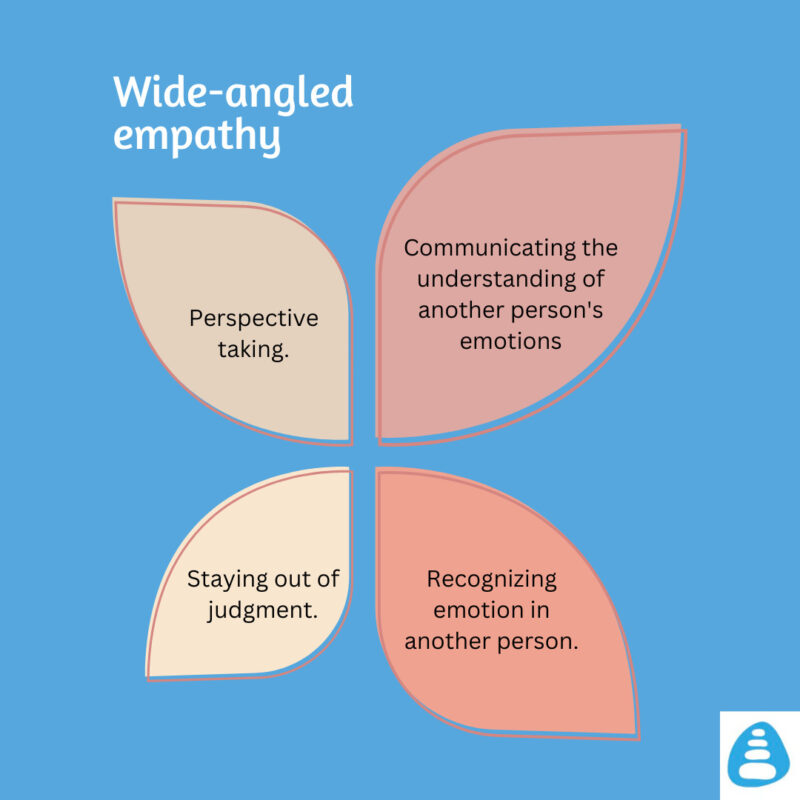
- Emotional Intelligence: Managers must help their direct reports build emotional intelligence to navigate internal and external challenges, fostering engagement and productivity.
The Shift to Coaching
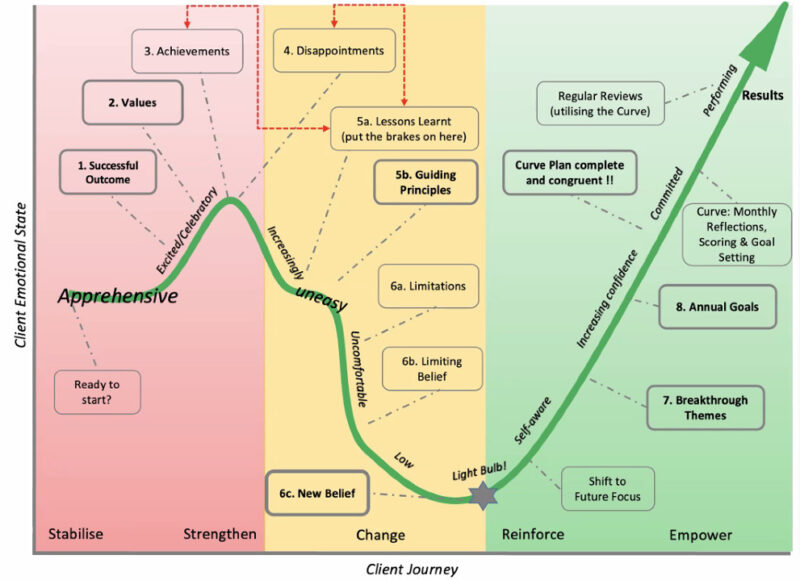
In today’s fast-paced organizations, managers can’t have all the answers. Instead, they must focus on providing support and guidance, leading to the rise of coaching-oriented management styles. The skills managers develop through coaching—collaboration, relationship-building, combating inner saboteurs, and authenticity—are essential for driving organizational success.
The Case for Change
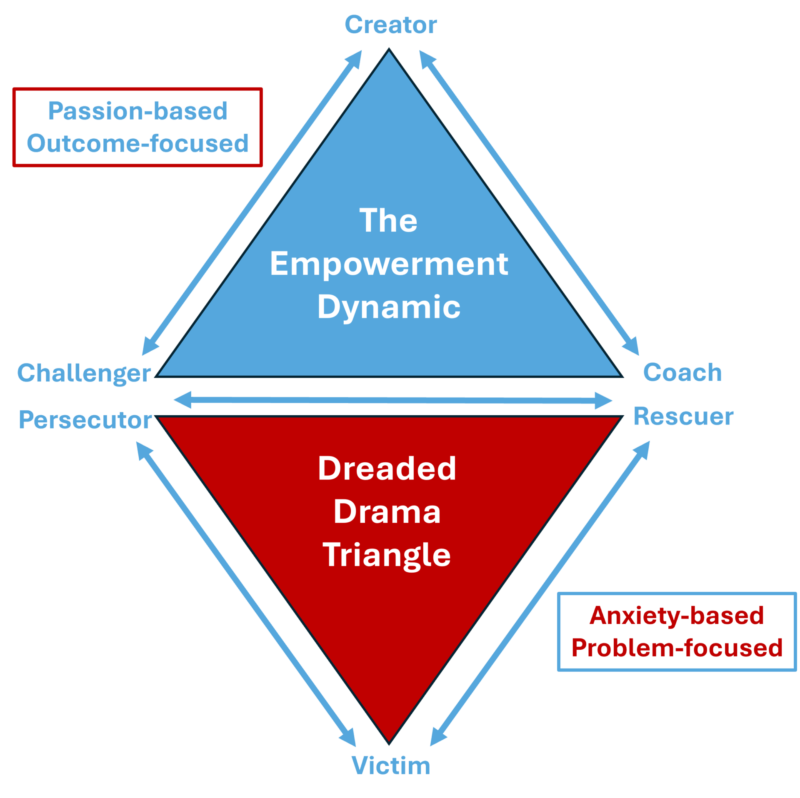
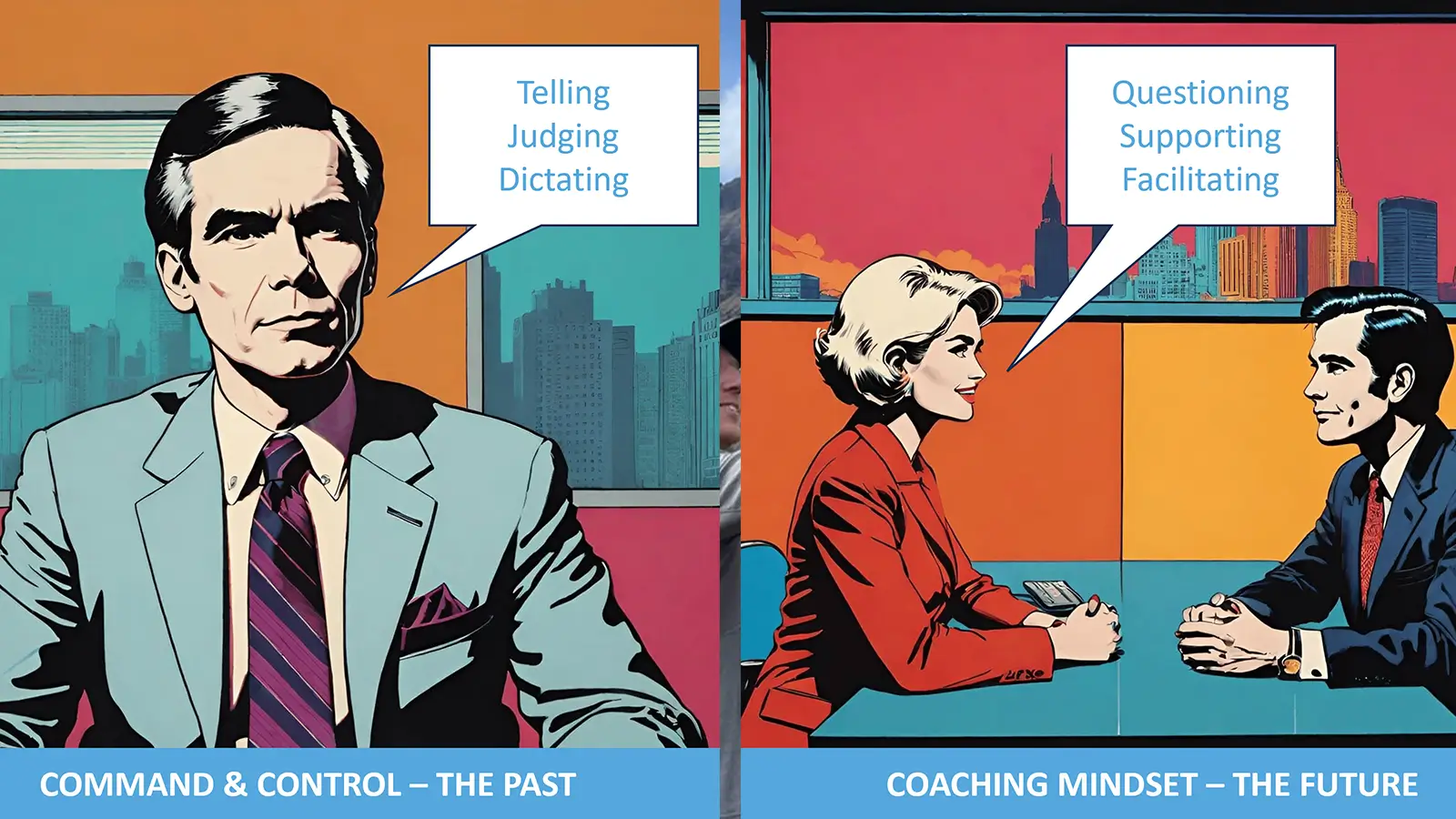
Many leaders may think they’re coaching effectively when, in reality, they’re merely guiding individuals toward predetermined solutions. However, true coaching involves active listening, insightful questioning, and empowering individuals to find their own answers. By shifting their mindset, managers can drive personal and organizational growth: questions not answers, support not judgement, facilitation rather than dictation.
The rate of change in organisations is increasing, and I suspect this may only increase in the years ahead. Managers simply won’t have all the information and answers to support their teams in delivery. This model in which managers give support and guidance rather than instructions will become ever more important.
Faux coaching – it was on my CV for years
The problem here is that “coaching” for many leaders typically consists of helping an individual towards the set of actions that they have already decided are suitable. I know this because I am one of the many that thought they had been practicing coaching for years. Initially open questions became ever so slightly more leading questions, before I eventually got into “tell” mode before the 121 time ran out should the coachee have “failed” to get there themselves. Unsurprisingly, many of those that suffered my “coaching” left the room with less energy and motivation than when they went in.
My argument for change
So how do you change the motivation of managers who have been operating in this vein, or HR managers who understandably have limited budget to spend on a universe of options? My pitch for organisational coaching capacity here is simple: focus on the “why”.
Middle (and senior!) managers are very busy. To change their approach, they will need to know this is not another HR fad, but something that is valuable for their own success, as well as that of the company. For me, this was a three-fold realisation:
- My best conversations were coach-like: the most impactful conversations in a year were those that identified previously hidden problems, uncovered new insights, and created new options. These tended to be coaching-led conversations where I was listening attentively, and asking questions. I wanted to know how to make these high value conversations happen more frequently and with intention.
- My value wasn’t in personal knowledge: discovering and experiencing the relief that I could add value when I didn’t know the answer. My job as a people manager was to help others find the answers that lay in them, and creating the space for them to think.
- I lacked the time: as team size increased, it took more and more time to solutionise the way through each barrier that staff brought to my door. The complexity of roles also increased, meaning solutions took longer to identify, let alone achieve. If I wanted to avoid burn-out, I had to find a better way to empower my team to do more for themselves. That meant helping them become more creative and autonomous, with accountability.
The bottom line here is that the middle manager as coach is a route to personal advancement as well as corporate value. No longer can managers command and control. They must re-invent themselves as coaches, with the support of their organisations in order to release the potential of the great people around them. It’s not just business sense, it’s also thoroughly rewarding at a personal level.
If you are interested in developing your organisation’s coaching skills, or your own, please let me know. It’s not rocket science, and it will make a difference to your teams.
Either drop me a line to say hi at alex@patient-mind.com, give me a ring on 0775 382 6096, or book a time for us at your convenience on www.calendly.com/alexpatient .